The All-Butter Pie Crust, Explained Once and For All
Flaky pastry is not luck. It is cold butter, a light hand and knowing when to stop.
Pie crust has a reputation for being temperamental. It isn’t. It follows three rules, and once you know them the dough behaves every time.
Rule one: keep it cold
Flakes come from pieces of solid butter that melt in the oven and leave steam pockets behind. If the butter melts on your counter, there is nothing left to create those layers. Cube the butter and chill it. Use iced water. If the kitchen is warm, chill the flour too.
Rule two: leave lumps
Work the butter into the flour until the largest pieces are the size of peas and the smallest look like coarse crumbs. Uniform sand makes a short, crumbly crust. Mixed sizes make flakes.
Rule three: less water, less work
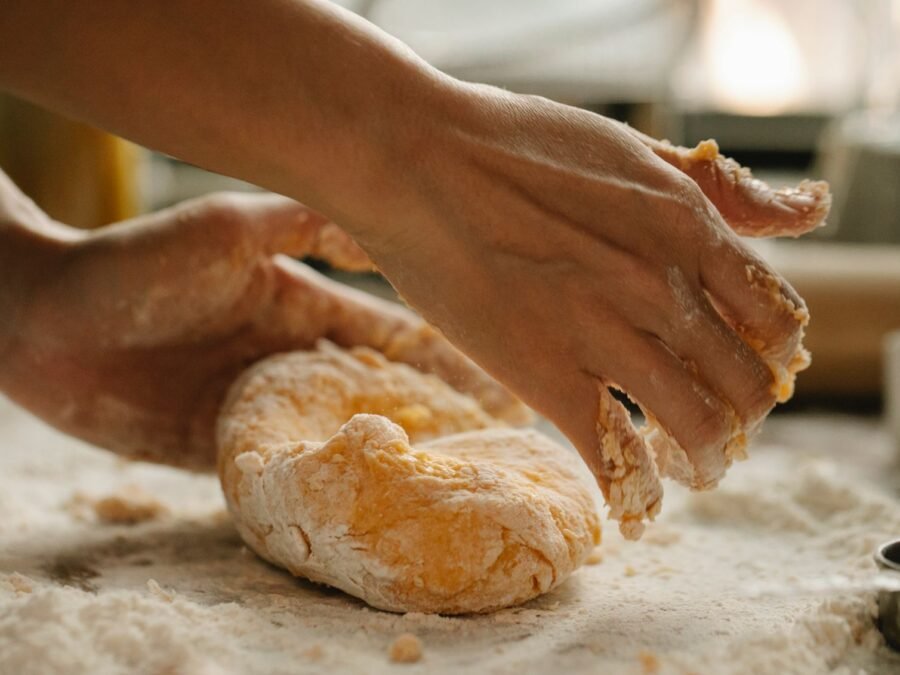
Water and handling develop gluten, and gluten makes pastry tough. Add water a spoonful at a time and stop as soon as the dough holds together when squeezed.
What you need (one 9-inch crust)
- 160 g plain flour (1¼ cups)
- ½ tsp salt, 1 tsp sugar
- 115 g cold unsalted butter, cubed (½ cup)
- 3–5 tbsp iced water
Method
- Whisk the flour, salt and sugar. Rub or cut in the butter until pea-sized.
- Sprinkle over 3 tbsp water and toss with a fork. Add more only if needed.
- Press into a disc, wrap and chill for at least an hour.
- Roll from the centre outwards, turning the dough a quarter turn after each pass.
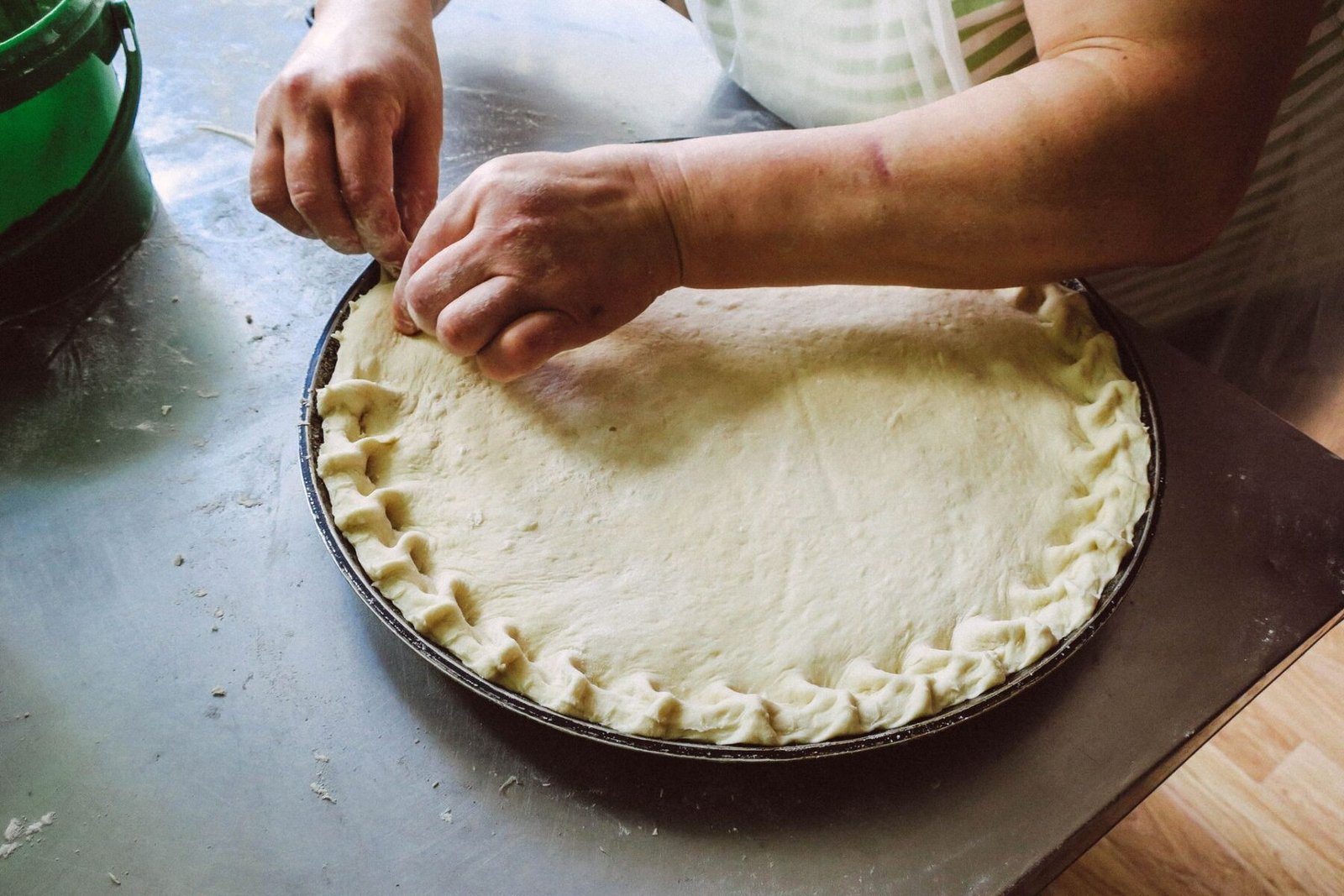
- Line the tin, crimp the edge and chill again for 20 minutes before baking.
The second chill is not optional. It is what stops the sides from slumping.
Bake on a preheated tray so the base crisps from underneath, and line the crust with parchment and baking beans when blind baking.